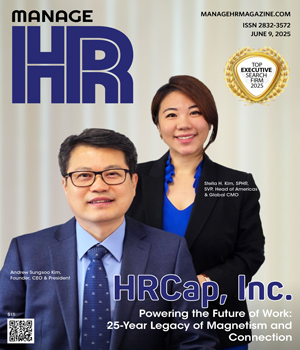
HRCap, Inc.: Powering the Future of Work: 25-Year Legacy of Magnetism and Connection

Top Employee Benefits Consulting and Brokerage Firm 2025

The human resources (HR) industry finds itself at a pivotal moment as the expectations of both employees and employers continue to evolve. Talent is harder to attract, tougher to retain and more vocal about what truly matters—purpose, flexibility and support beyond a paycheck. This shift has led to the role of employee benefits consulting and executive search firms becoming more essential than ever.

In this edition of Manage HR, we explore how employee benefits consultants and executive search firms are shaping the future of the HR industry.

Workers today expect more than basic health coverage; they want meaningful support across financial, physical and emotional well-being. Benefits consulting and brokerage firms are helping employers design benefits packages that are equitable, inclusive and responsive to fundamental human needs. The outdated model of generic group plans is rapidly being replaced by agile, personalized programs that can flex with workforce demographics and values.

Benefits consultants are rapidly integrating advanced technology and analytics into the consulting process. By leveraging predictive modeling and real-time utilization data, they advise clients on what benefits to offer, how to communicate with them effectively and how to optimize adoption.

Moreover, the compliance burden on HR teams has intensified with the introduction of mental health parity laws, evolving leave mandates and healthcare transparency rules. Modern benefits consultants integrate legal expertise into their services to help clients stay ahead of regulatory shifts.

Executive search firms have stepped into a more strategic role. It’s not just about filling leadership roles anymore; it’s about finding leaders who can connect with people, lead authentically and calmly navigate complexity. These firms act as scouts and advisors, offering a deep understanding of industries, cultures and emerging leadership needs. They spend significant time getting to know the business and the humans behind it—what drives them, where they want to go and who can get them there. The stakes are higher than ever, and these firms deliver precision, confidentiality and long-term alignment.

We hope this edition of Manage HR helps you find the right partner for your business requirements.


    Top Employee Benefits Consulting and Brokerage Firm

    Founded in 1968, Taylor Insurance Services designs and delivers next-generation employee benefits strategies for municipalities, manufacturers, and mid-size businesses in 43 states. With a focus on relentless client advocacy, Taylor blends personal service, deep expertise, and proprietary innovation to change the way benefits impact organizations and communities. ... read full profile

Employee Benefits Info

Q1
What Do Top Employee Benefits Companies Provide to Employers and Employees?
Top Employee Benefits Companies help organizations design, manage and improve benefit programs that support employee health, financial security and workplace satisfaction. These companies may provide benefits consulting, enrollment technology, retirement planning support, legal insurance programs, wellness initiatives and benefits administration services. The category has expanded well beyond traditional health coverage as employers look for ways to improve retention and strengthen workforce engagement. In the U.S. market, many providers now combine advisory expertise with digital platforms that simplify benefits communication, compliance management and employee decision-making.
Q2
Why Do Top Employee Benefits Companies Matter More in Today’s Workforce Environment?
Top Employee Benefits Companies have become increasingly important as employers compete for talent in a labor market shaped by rising healthcare costs, hybrid work expectations and growing demand for personalized support programs. Employees now evaluate workplace quality partly through the strength and flexibility of benefits offerings. Organizations are also under pressure to address mental wellness, caregiving responsibilities, financial stress and long-term retirement planning. Manage HR Magazine’s employee benefits coverage reflects how the category now intersects with employee experience, retention strategy and organizational culture rather than functioning as a purely administrative HR function.
Q3
How Should Organizations Evaluate Employee Benefits Providers?
Organizations evaluating employee benefits providers should look beyond pricing alone and assess strategic fit, scalability and service quality. Key considerations often include regulatory expertise, enrollment experience, reporting capabilities, integration with HR systems and employee support responsiveness. Many employers also prioritize providers that can tailor benefits communication for multigenerational workforces and distributed teams. For mid-sized and enterprise organizations, technology usability has become a major differentiator because employees increasingly expect digital self-service access for enrollment, claims support and benefits education. Strong providers also help HR leaders interpret workforce data to improve participation and utilization outcomes.
Q4
What Business Value Do Top Employee Benefits Companies Deliver?
Top Employee Benefits Companies contribute to workforce stability by helping employers improve employee satisfaction, retention and productivity. Effective benefits strategies can reduce turnover pressure while helping organizations strengthen recruitment positioning in competitive sectors. Benefit programs also influence absenteeism, financial wellness and employee engagement. Many employers now treat benefits planning as part of broader workforce strategy rather than a compliance requirement. In industries facing labor shortages or burnout concerns, strong employee benefits programs often play a direct role in supporting workforce continuity and long-term organizational performance.
Q5
How Are Innovation and Technology Shaping the Employee Benefits Landscape?
Technology is changing how employee benefits are delivered, administered and personalized. Many providers now use cloud-based platforms, automation and analytics to streamline enrollment workflows, improve compliance visibility and support year-round employee engagement. Artificial intelligence and predictive analytics are also beginning to influence plan recommendations and employee communication strategies. The broader employee benefits ecosystem increasingly includes financial wellness tools, mental health resources, caregiving support and digital navigation services. The shift reflects growing demand for benefits experiences that are easier to access, easier to understand and more aligned with modern workforce expectations.
Q6
What Should Decision-Makers Prioritize When Comparing Top Employee Benefits Companies?
Decision-makers comparing Top Employee Benefits Companies should prioritize long-term partnership value rather than focusing only on short-term cost reductions. Strong providers typically combine industry expertise, responsive support and adaptable technology with a clear understanding of workforce demographics and compliance requirements. Employers should also evaluate whether a provider can support future workforce changes, including remote work models, evolving healthcare expectations and rising demand for personalized benefits experiences. The most effective partnerships usually balance administrative efficiency with employee-centered support that helps organizations strengthen workforce trust and engagement over time.
Take Me Top